Hello,

Sign up to join our community!

Welcome Back,

Please sign in to your account!

Forgot Password,

Lost your password? Please enter your email address. You will receive a link and will create a new password via email.


You must login to add post.

Please briefly explain why you feel this question should be reported.

Please briefly explain why you feel this answer should be reported.

Please briefly explain why you feel this user should be reported.

Lets Inspire Latest Questions

Poll Results

Please login to vote and see the results.

Participate in Poll, Choose Your Answer.

Computer performance depends heavily on the efficiency of its processor. Often referred to as the CPU processor, it acts as the brain of the system, handling instructions and managing tasks. Whether you are using a PC Processor or exploring different ...Read more

Computer performance depends heavily on the efficiency of its processor. Often referred to as the CPU processor, it acts as the brain of the system, handling instructions and managing tasks. Whether you are using a PC Processor or exploring different Processors in general, the goal remains the same—fast and reliable computing.

Modern systems rely on advanced Computer Processors that balance speed and power consumption. From basic browsing to complex data handling, the CPU determines how smoothly your device performs. Without a strong processing unit, even the best hardware struggles to deliver optimal results.

Optimize Performance in Everyday Devices

Every digital task, from opening applications to running software, depends on processing capability. Today’s PC Processor designs are more efficient than ever, offering better multitasking and thermal control. As applications become more demanding, the need for high-performance Processors continues to grow.

These improvements are not just about speed; they also enhance energy efficiency and system stability. Users now expect devices to handle heavy workloads without lag, making processor innovation a key focus in computing technology.

Enhance Speed with Laptop Processors

Modern Laptop Processors are designed to deliver powerful performance within compact systems. Unlike traditional desktop chips, they balance mobility and efficiency, making them ideal for students, professionals, and gamers alike. A strong CPU processor in laptops ensures smooth multitasking, faster boot times, and improved application responsiveness.

Manufacturers continue to push the boundaries of Computer Processors by integrating more cores and smarter architectures. This allows laptops to handle demanding workloads such as video editing, coding, and virtual meetings without overheating or slowing down. As a result, users experience desktop-level performance in portable devices.

Strengthen Your Computing Experience

Choosing the right processor directly impacts overall system performance. Whether you are comparing PC Processor options or exploring next-generation Processors, understanding their capabilities helps you make smarter technology decisions. With continuous innovation in CPU processor design, computing is becoming faster, smarter, and more efficient than ever before.

Read less
  1. This is a clear and engaging overview of processors and their role in computer performance. It does a great job of reinforcing the idea that the CPU is the “brain” of the system and connects that concept well to real-world usage like multitasking, gaming, and productivity. A strong aspect of your poRead more

    This is a clear and engaging overview of processors and their role in computer performance. It does a great job of reinforcing the idea that the CPU is the “brain” of the system and connects that concept well to real-world usage like multitasking, gaming, and productivity.

    A strong aspect of your post is the balance between desktop and laptop processors—you explain their differences in a practical way while keeping the focus on performance and efficiency. The emphasis on modern improvements like multi-core designs and thermal management also keeps the content relevant.

    See less
0
0
Like1 User
1 User

Poll Results

Please login to vote and see the results.

Participate in Poll, Choose Your Answer.

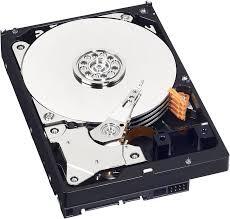
A desktop PC hard drive is a storage device used to save and retrieve digital data such as operating systems, software, documents, photos, and videos. It is a crucial component of any desktop computer, ensuring that your files are محفوظ ...Read more

A desktop PC hard drive is a storage device used to save and retrieve digital data such as operating systems, software, documents, photos, and videos. It is a crucial component of any desktop computer, ensuring that your files are محفوظ even when the system is turned off. There are two main types of hard drives: HDD (Hard Disk Drive) and SSD (Solid State Drive). HDDs use spinning disks to store data, while SSDs rely on flash memory, making them faster and more reliable.

What are the Types of Desktop PC Hard Drives?

Desktop PC hard drives come in different forms based on technology and performance. HDDs are traditional and more affordable, offering large storage capacities. SSDs, on the other hand, provide faster data access, quicker boot times, and better durability. There are also hybrid drives (SSHDs) that combine both technologies. Choosing between them depends on your needs—budget users may prefer HDDs, while gamers and professionals often choose SSDs.

How to Choose the Right Hard Drive?

When selecting a desktop PC hard drive, consider storage capacity, speed, and budget. If you need large storage for media files, a 1TB or 2TB HDD is a good option. For faster performance, a 256GB or 512GB SSD works well. Many users combine both: an SSD for the operating system and an HDD for storage. Also, check compatibility with your motherboard before purchasing.

Why is a Good Hard Drive Important?

A reliable hard drive improves overall system performance, reduces loading times, and ensures data safety. Investing in a quality desktop PC hard drive enhances productivity and provides a smoother computing experience.

Read less
  1. One strong point is how you connect the technical details to real user needs—like faster boot times or storing large media files—which makes the content more relatable. A small improvement would be to clarify or translate the word “محفوظ” (saved/secure) to keep the language consistent throughout. YoRead more

    One strong point is how you connect the technical details to real user needs—like faster boot times or storing large media files—which makes the content more relatable.

    A small improvement would be to clarify or translate the word “محفوظ” (saved/secure) to keep the language consistent throughout. You could also briefly mention newer SSD types like NVMe for even faster performance, as that’s becoming a common choice today.

    Overall, it’s well-structured, easy to understand, and gives readers helpful guidance for making a decision.

    See less
0
0
Like1 User
1 User

Poll Results

Please login to vote and see the results.

Participate in Poll, Choose Your Answer.

What is a Transceiver Module? A transceiver module is an electronic device that can both transmit and receive signals. It combines the functions of a transmitter and a receiver into a single unit, making it a critical ...Read more

What is a Transceiver Module?

A transceiver module is an electronic device that can both transmit and receive signals. It combines the functions of a transmitter and a receiver into a single unit, making it a critical component in modern communication systems. These modules are widely used in networking, telecommunications, and data transfer applications, including fiber optics and wireless communications.

Types of Transceiver Modules

Transceiver modules come in various types depending on the technology and application:

  • Optical Transceivers: Used in fiber optic networks, they convert electrical signals to optical signals and vice versa. Examples include SFP (Small Form-factor Pluggable), SFP+, QSFP, and CFP modules.
  • Wireless Transceivers: Found in Wi-Fi, Bluetooth, and cellular devices, these modules handle radio frequency (RF) signals for wireless communication.
  • Copper Transceivers: Operate over traditional Ethernet cables, supporting different speeds such as 1G, 10G, or higher.

Key Features of Transceiver Modules

  • Bidirectional Communication: Allows simultaneous sending and receiving of data.
  • High-Speed Data Transfer: Supports efficient and fast data transmission, crucial for modern networks.
  • Hot-Swappable: Many modules, especially SFP types, can be replaced without shutting down the system.
  • Compatibility: Designed to match specific standards (e.g., IEEE, optical wavelengths) for smooth integration into networks.

Applications of Transceiver Modules

Transceiver modules are integral to:

  • Data Centers: Connecting servers, switches, and storage devices.
  • Telecommunication Networks: Enabling long-distance high-speed data transmission.
  • Industrial Networking: Supporting reliable communication in automated systems.

Conclusion

In summary, a transceiver module is a versatile and essential technology that enables efficient, high-speed, and reliable communication across wired and wireless networks. Choosing the right module is vital for optimizing network performance and maintaining connectivity in modern digital infrastructure.

Read less
  1. This is a clear and well-structured explanation of transceiver modules. It effectively defines the concept, then builds understanding by breaking it into types, features, and applications. The inclusion of real examples like SFP and QSFP helps make the content more practical and relatable.

    This is a clear and well-structured explanation of transceiver modules. It effectively defines the concept, then builds understanding by breaking it into types, features, and applications. The inclusion of real examples like SFP and QSFP helps make the content more practical and relatable.

    See less
0
0
Like1 User
1 User

Latest News & Updates

Lets Inspire Latest Articles

Decompressing with Digital Destruction: A Look at Kick the Buddy and Beyond

Life can be a pressure cooker, and sometimes, you just need a healthy outlet to blow off a little steam. While traditional stress-relief methods are great, there’s a certain catharsis to be found in the world of digital destruction games. ...

Managing Your Own Monkey Store: A Fun Guide to Monkey Mart

Managing Your Own Monkey Store: A Fun Guide to Monkey Mart

Introduction Ever dreamed of running your own grocery store? Monkey Mart offers a delightful simulation experience where you become a shop owner with a quirky twist – your employees are adorable monkeys! This charming browser-based game combines time management, strategy, and resource ...

MmoGah Action Online Games Bring Competitive Multiplayer Fun Online

MmoGah Action Online Games Bring Competitive Multiplayer Fun Online

An effective opening paragraph must intrigue readers by drawing them in with captivating prose and conveying your point of view on a subject matter. Furthermore, it should set up the paragraphs that follow and serve as context. To do so ...

Conquering Chaos: A Dive into the Unpredictable World of Level Devil

Ever felt like games were getting a little too predictable? Too much hand-holding, too many obvious solutions? If you’re yearning for a challenge that throws the rulebook out the window, then it’s time to talk about Level Devil. This seemingly simple ...

Unlocking the Joy of Wordplay: A Guide to the Connections Game 

Ever find yourself with a few spare moments and a hankering for a quick mental workout? Look no further than the delightful world of word-based puzzle games. While many exist, one that has truly captivated me recently is the Connections Game. ...

Explore Our Blog