
Hello,

Sign up to join our community!

Welcome Back,

Please sign in to your account!

Forgot Password,

Lost your password? Please enter your email address. You will receive a link and will create a new password via email.


You must login to add post.

Please briefly explain why you feel this question should be reported.

Please briefly explain why you feel this answer should be reported.

Please briefly explain why you feel this user should be reported.

Latest Questions

Poll Results

Please login to vote and see the results.

Participate in Poll, Choose Your Answer.
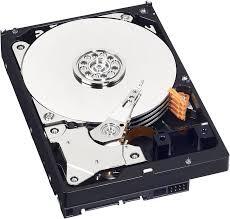
A desktop PC hard drive is a storage device used to save and retrieve digital data such as operating systems, software, documents, photos, and videos. It is a crucial component of any desktop computer, ensuring that your files are محفوظ ...Read more

A desktop PC hard drive is a storage device used to save and retrieve digital data such as operating systems, software, documents, photos, and videos. It is a crucial component of any desktop computer, ensuring that your files are محفوظ even when the system is turned off. There are two main types of hard drives: HDD (Hard Disk Drive) and SSD (Solid State Drive). HDDs use spinning disks to store data, while SSDs rely on flash memory, making them faster and more reliable.

What are the Types of Desktop PC Hard Drives?

Desktop PC hard drives come in different forms based on technology and performance. HDDs are traditional and more affordable, offering large storage capacities. SSDs, on the other hand, provide faster data access, quicker boot times, and better durability. There are also hybrid drives (SSHDs) that combine both technologies. Choosing between them depends on your needs—budget users may prefer HDDs, while gamers and professionals often choose SSDs.

How to Choose the Right Hard Drive?

When selecting a desktop PC hard drive, consider storage capacity, speed, and budget. If you need large storage for media files, a 1TB or 2TB HDD is a good option. For faster performance, a 256GB or 512GB SSD works well. Many users combine both: an SSD for the operating system and an HDD for storage. Also, check compatibility with your motherboard before purchasing.

Why is a Good Hard Drive Important?

A reliable hard drive improves overall system performance, reduces loading times, and ensures data safety. Investing in a quality desktop PC hard drive enhances productivity and provides a smoother computing experience.

Read less
  1. One strong point is how you connect the technical details to real user needs—like faster boot times or storing large media files—which makes the content more relatable. A small improvement would be to clarify or translate the word “محفوظ” (saved/secure) to keep the language consistent throughout. YoRead more

    One strong point is how you connect the technical details to real user needs—like faster boot times or storing large media files—which makes the content more relatable.

    A small improvement would be to clarify or translate the word “محفوظ” (saved/secure) to keep the language consistent throughout. You could also briefly mention newer SSD types like NVMe for even faster performance, as that’s becoming a common choice today.

    Overall, it’s well-structured, easy to understand, and gives readers helpful guidance for making a decision.

    See less
0
0
Like1 User
1 User

Poll Results

Please login to vote and see the results.

Participate in Poll, Choose Your Answer.

What is a Transceiver Module? A transceiver module is an electronic device that can both transmit and receive signals. It combines the functions of a transmitter and a receiver into a single unit, making it a critical ...Read more

What is a Transceiver Module?

A transceiver module is an electronic device that can both transmit and receive signals. It combines the functions of a transmitter and a receiver into a single unit, making it a critical component in modern communication systems. These modules are widely used in networking, telecommunications, and data transfer applications, including fiber optics and wireless communications.

Types of Transceiver Modules

Transceiver modules come in various types depending on the technology and application:

  • Optical Transceivers: Used in fiber optic networks, they convert electrical signals to optical signals and vice versa. Examples include SFP (Small Form-factor Pluggable), SFP+, QSFP, and CFP modules.
  • Wireless Transceivers: Found in Wi-Fi, Bluetooth, and cellular devices, these modules handle radio frequency (RF) signals for wireless communication.
  • Copper Transceivers: Operate over traditional Ethernet cables, supporting different speeds such as 1G, 10G, or higher.

Key Features of Transceiver Modules

  • Bidirectional Communication: Allows simultaneous sending and receiving of data.
  • High-Speed Data Transfer: Supports efficient and fast data transmission, crucial for modern networks.
  • Hot-Swappable: Many modules, especially SFP types, can be replaced without shutting down the system.
  • Compatibility: Designed to match specific standards (e.g., IEEE, optical wavelengths) for smooth integration into networks.

Applications of Transceiver Modules

Transceiver modules are integral to:

  • Data Centers: Connecting servers, switches, and storage devices.
  • Telecommunication Networks: Enabling long-distance high-speed data transmission.
  • Industrial Networking: Supporting reliable communication in automated systems.

Conclusion

In summary, a transceiver module is a versatile and essential technology that enables efficient, high-speed, and reliable communication across wired and wireless networks. Choosing the right module is vital for optimizing network performance and maintaining connectivity in modern digital infrastructure.

Read less
  1. This is a clear and well-structured explanation of transceiver modules. It effectively defines the concept, then builds understanding by breaking it into types, features, and applications. The inclusion of real examples like SFP and QSFP helps make the content more practical and relatable.

    This is a clear and well-structured explanation of transceiver modules. It effectively defines the concept, then builds understanding by breaking it into types, features, and applications. The inclusion of real examples like SFP and QSFP helps make the content more practical and relatable.

    See less
0
0
Like1 User
1 User

Latest News & Updates

Latest Articles

Touchdowns, Teamwork, and Tiny Terrors: Unpacking the Charm of Football Bros (and Beyond!)

In the vast and ever-expanding universe of gaming, sometimes the most engaging experiences aren’t found in hyper-realistic graphics or sprawling open worlds. Sometimes, it’s the charming, accessible, and surprisingly strategic titles that truly capture our hearts. Today, we’re diving headfirst ...

Unveiling the Unexpected: A Guide to the World of Omegle

Unveiling the Unexpected: A Guide to the World of Omegle

In the vast and ever-expanding digital landscape, platforms emerge that offer unique avenues for connection and serendipitous encounters. One such platform, having captivated users for years with its straightforward yet intriguing premise, is Omegle. For the uninitiated, Omegle is a ...

Unveiling the Unexpected: A Guide to the World of Omegle

Unveiling the Unexpected: A Guide to the World of Omegle

In the vast and ever-expanding digital landscape, platforms emerge that offer unique avenues for connection and serendipitous encounters. One such platform, having captivated users for years with its straightforward yet intriguing premise, is Omegle. For the uninitiated, Omegle is a ...

Unleash Your Inner Stunt Driver: A Deep Dive into Drive Mad

Unleash Your Inner Stunt Driver: A Deep Dive into Drive Mad

There’s a unique satisfaction in overcoming a challenge, especially when that challenge involves defying gravity in a ridiculously oversized vehicle. If you’re a fan of physics-based puzzles and chaotic driving, then you’ve likely stumbled upon the delightful absurdity of games ...

Explore Our Blog